
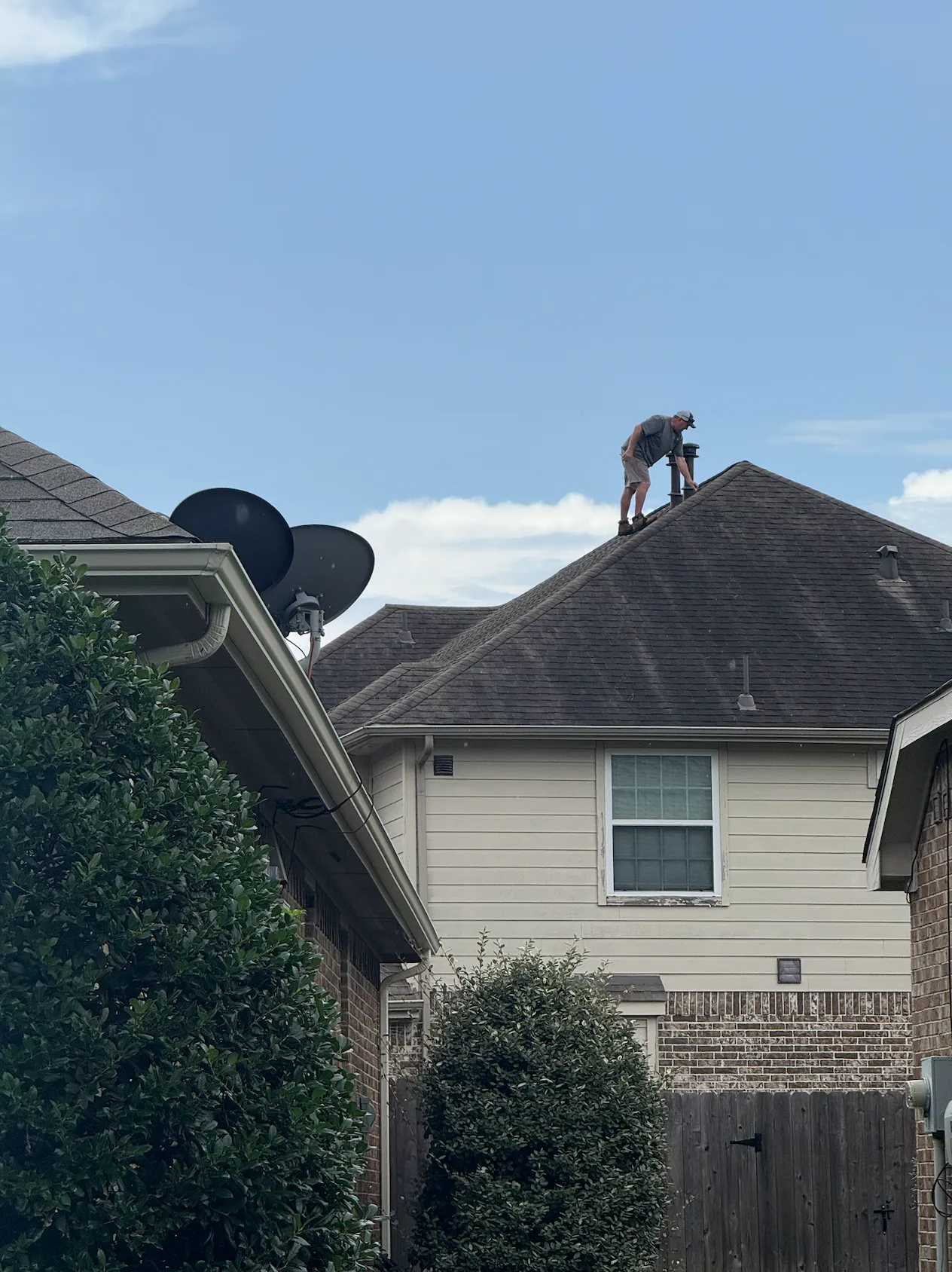
What's in the forty-photo packet
- Every slope — north, south, east, west — at roof level.
- Every valley, ridge, and penetration (pipe boots, vents, skylights, chimneys).
- Close-ups of any concerning finding: granule loss, hail bruising, wind creasing, lifted seals, nail pops, flashing gaps.
- Attic photos where accessible — decking stains, insulation moisture, and whether ventilation is anywhere near the 1-in-300 guideline (an under-vented attic can hit 140°F on a 90°F day per ARMA).
- A plain-English written summary of condition plus estimated remaining life.
What the findings actually mean
An inspection is only useful if it turns photos into decisions:
- Granule lossthe shingle's UV armor wearing off — IBHS research shows exposed asphalt embrittles faster. Light loss is aging; heavy or patterned loss is a countdown.
- Hail evidencebruised mats and crushed granules on the roof, dents on gutters and A/C fins at ground level. IBHS testing shows even repeated small hail quietly ages shingles — which is why post-storm checks matter even without visible carnage.
- Wind evidencecreased tabs and broken sealant bonds — the failure IBHS identifies as wind's actual mechanism. Often invisible from the ground.
- Component wearcracked pipe boots (commonly within 10–15 years), rusted or lifted flashing, nail pops — the cheap-to-fix-now list.
Who this is for
- Homeownerscurious about roof age, planning ahead, or checking after a storm.
- Sellers and their agentsa documented healthy roof removes a negotiation lever before listing; if there's an issue, you control the fix instead of the buyer's inspector controlling the narrative.
- Buyersturn 'roof looks old' into specifics with a remaining-life estimate — fast turnaround for option periods.
- Insurance claimantsknow whether damage justifies a claim before you file. A denied claim is worse than no claim.
- Annual-checkup ownersespecially on heavily-treed lots, where debris and shade age roofs faster than the calendar.
What we don't do on an inspection call
- We don't give a verbal quote and leave. The findings and any estimate are written.
- We don't pressure a contract. If you need a repair or replacement, we'll follow up — you can ignore us forever.
- We don't knock doors. This call happens because you booked it.
Why free?
Market data (Angi, 2026) puts paid roof inspections at a $250 national average — $75–$200 for physical inspections, $150–$600 for drone work — and notes many contractors offer them free. Ours is free because documented honesty is how we earn the work that matters: you keep the full packet and findings whether or not you ever hire us.