
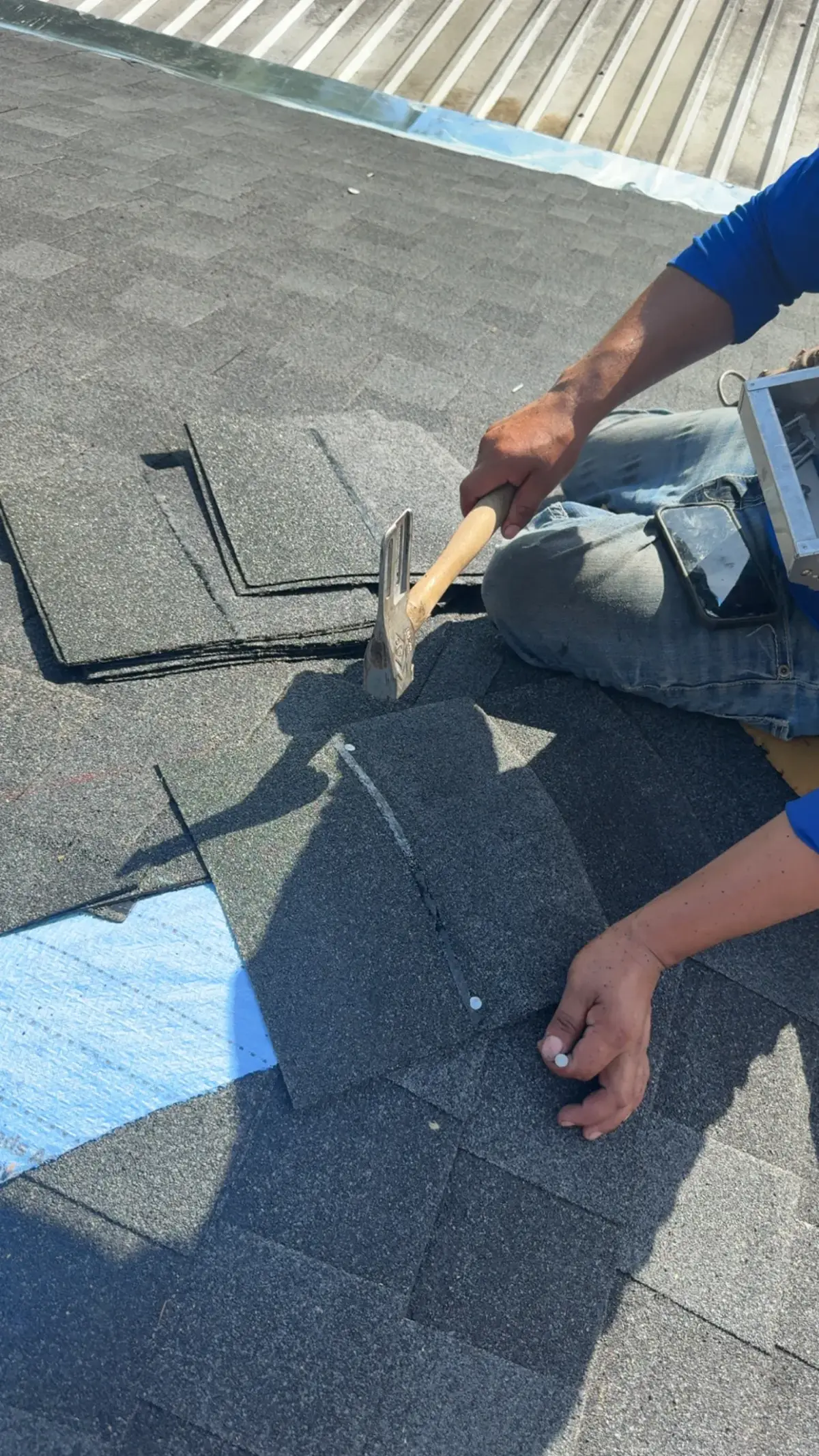
The repairs we see most
- Pipe boot failuresthe neoprene collar around plumbing vents degrades in UV and commonly cracks within roughly 10–15 years — one of the most common causes of roof leaks, and the usual culprit behind a mystery ceiling stain. Here's why they fail.
- Ridge-cap lift and wind-creased shinglescommon after high-wind events — IBHS research shows the sealant bond between shingles is what fails in wind, and it weakens as roofs age. If only a few caps lifted, a targeted repair is honest. If creasing is widespread, we'll tell you.
- Flashing at wall step-ins and chimneysthe code's entire purpose for flashing is keeping water out of roof joints (IRC R903.2). Water takes the path of least resistance, and aged step flashing is often it.
- Valley problemsdebris-packed valleys hold moisture against shingles and channel water under edges — especially under this area's pine canopy, where valleys load up fast.
- Nail popsnails backing out push through the shingle above; every one is a potential leak, and each is minutes to fix once found.
- Granule loss and blisteringgranules are the shingle's UV armor — IBHS research shows exposed asphalt embrittles and ages faster. Heavy loss usually signals a roof near end-of-life; we'll show you photos and let you decide.
Emergency repairs and storm triage
Active leaks jump the queue. When storms move through — and the National Weather Service counts 50–60 thunderstorm days a year in southeast Texas — we run triage: emergency tarping first to stop the water, then a documented assessment of whether you're looking at a repair, a replacement, or an insurance claim. If a storm just hit, start with our storm-response page; if the damage looks claim-worthy, our storm damage and insurance claims guides walk the Texas rules.
When we say "just repair it"
We're happy to repair. We won't upsell a replacement when a sound repair will give you several more good years. The forty-photo packet we leave shows the rest of the roof too, so you know what to watch. For market context, Angi (2026) puts typical roof repairs at $400–$2,000 — and our diagnosis and price come in writing before any work starts.
When we say "it's time to replace"
If the roof is in its replacement window (InterNACHI puts 3-tab shingles around 20 years and architectural around 30 — less in hot climates like ours), or any age after a storm with structural damage, a patch is throwing money at a lost cause. We'll show you why, in photos, and quote both paths if it's genuinely close.