
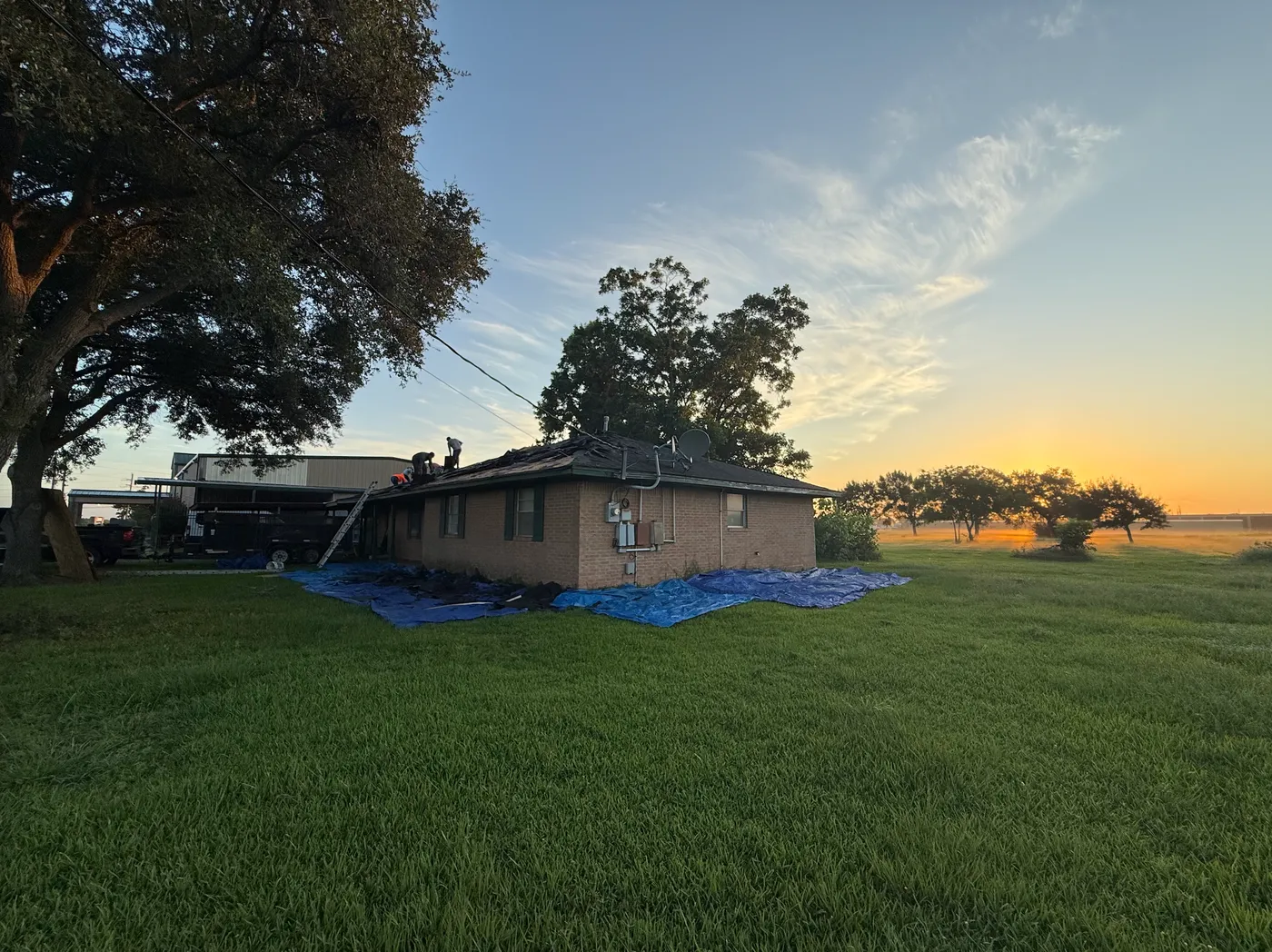
The storms this region actually gets
The risk here isn't hypothetical — it's federal record. NWS counts 50–60 thunderstorm days a year in southeast Texas, about a third severe, with downbursts of 60 to 100+ mph. NOAA's Storm Events Database logs damaging hail in Montgomery County nearly every year. Hurricane Beryl (2024) pushed a measured 69-mph gust to Conroe, well inland; the May 2024 derecho crossed the metro with winds estimated near 100 mph in places; Harvey dropped over 25 inches of rain on The Woodlands. Roofs here are systems designed against a certainty, not a maybe.
How to tell if your roof took a hit
- Gutters: fresh round dents on the downside of a gutter or on the aluminum gutter apron.
- Flashing: new dings on soft aluminum step flashing or on a turtle vent.
- A/C unit: dings on the condenser coil fins are a strong hail-size proxy — photograph them.
- Shingles: granule loss pooled in gutters and downspouts beyond normal shed.
- Ridge caps: lifted or torn at a single ridge plane — a high-wind exposure indicator.
- And the quiet damage: IBHS testing shows repeated sub-severe hail plus normal weathering makes shingles behave like decade-older material — storm-weakened without one dramatic event. A documented inspection settles it.
The claim-ready packet
Insurance adjusters work fast, and documentation is what speeds up a claim. We bring:
- Forty photos minimum — every slope, every penetration, close-ups of damage.
- Hail-size correlation photos (A/C coil, gutter aprons, soft metal).
- A written scope of loss aligned to Xactimate line items.
- On-site attendance during your adjuster's visit if you'd like.
- And the clock works for you: Texas prompt-payment law (Ins. Code Ch. 542) requires your insurer to acknowledge a claim within 15 days, decide within 15 business days of having what it needs, and pay within 5 business days of accepting. Details in our insurance claims guide.
Things we won't touch
- Deductible games. Texas law (Ins. Code §707.002; Bus. & Com. Code §27.02) requires you to pay your deductible and makes it an offense for a contractor to pay, waive, or absorb it — TDI warns of fines and jail. Anyone offering to "eat it" is proposing fraud with your name attached.
- Pressure signings at the door. It's against the law for out-of-town contractors to demand a down payment before starting work after a disaster. TDI's storm guidance adds: get multiple bids, and never sign a contract that assigns work "for the value of insurance proceeds." We leave written estimates and let you decide on your schedule.
- Acting as your public adjuster. Texas Insurance Code §4102.163 prohibits a roofing contractor from adjusting the same property's claim. We're the contractor: we document and build; you (or a licensed PA you hire separately) negotiate.