- How much does a roof replacement cost in The Woodlands?
- Every roof is priced from its own size, pitch, material, and decking condition — we put your exact price in writing before we leave the driveway. For market context: Angi (2026) reports a national average of $9,602 with most projects between $5,900 and $46,000, and Modernize (2026) lists architectural shingle at roughly $4.11–$5.57 per square foot installed. Larger Woodlands homes with complex rooflines trend above national averages.
- Do I need a permit to replace my roof in The Woodlands?
- No county building permit — Montgomery County's permitting FAQ states residential properties do not require a permit for a roof. What you do need is prior written approval from your village's Residential Design Review Committee under The Woodlands Township's 2024 Residential Development Standards, which cover all roof replacement (and even roofing repairs). We prepare and file that application as part of every job.
- How does the HOA / Township approval work?
- Applications go through the Township's Civic Access Portal to your village RDRC, with product samples where required. The Standards give committees up to 45 days to act (most approvals come back much sooner), no property survey is needed for a re-roof, and some items — like gutters and color-compatible roof vents — are pre-approved. We handle the paperwork end to end and never order material before approval.
- How long does a roof replacement take?
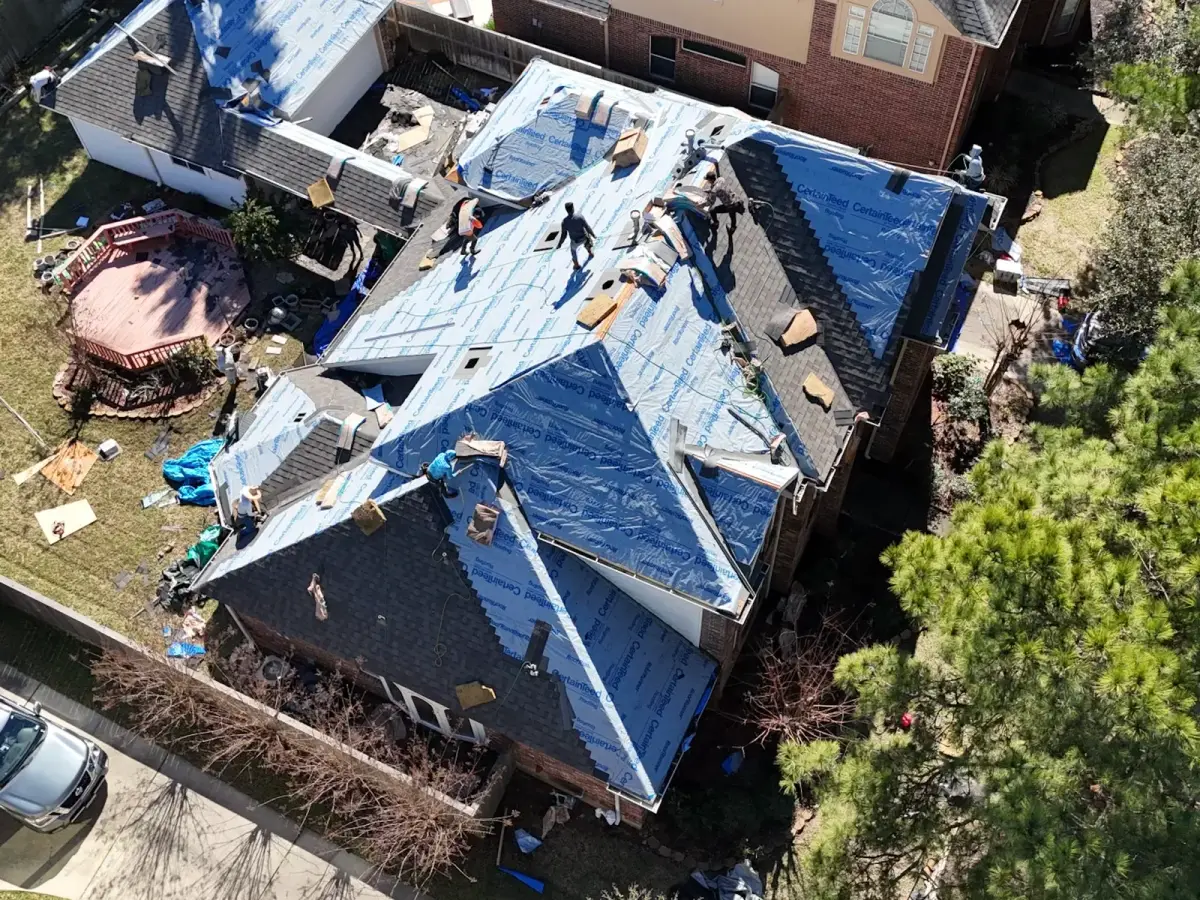
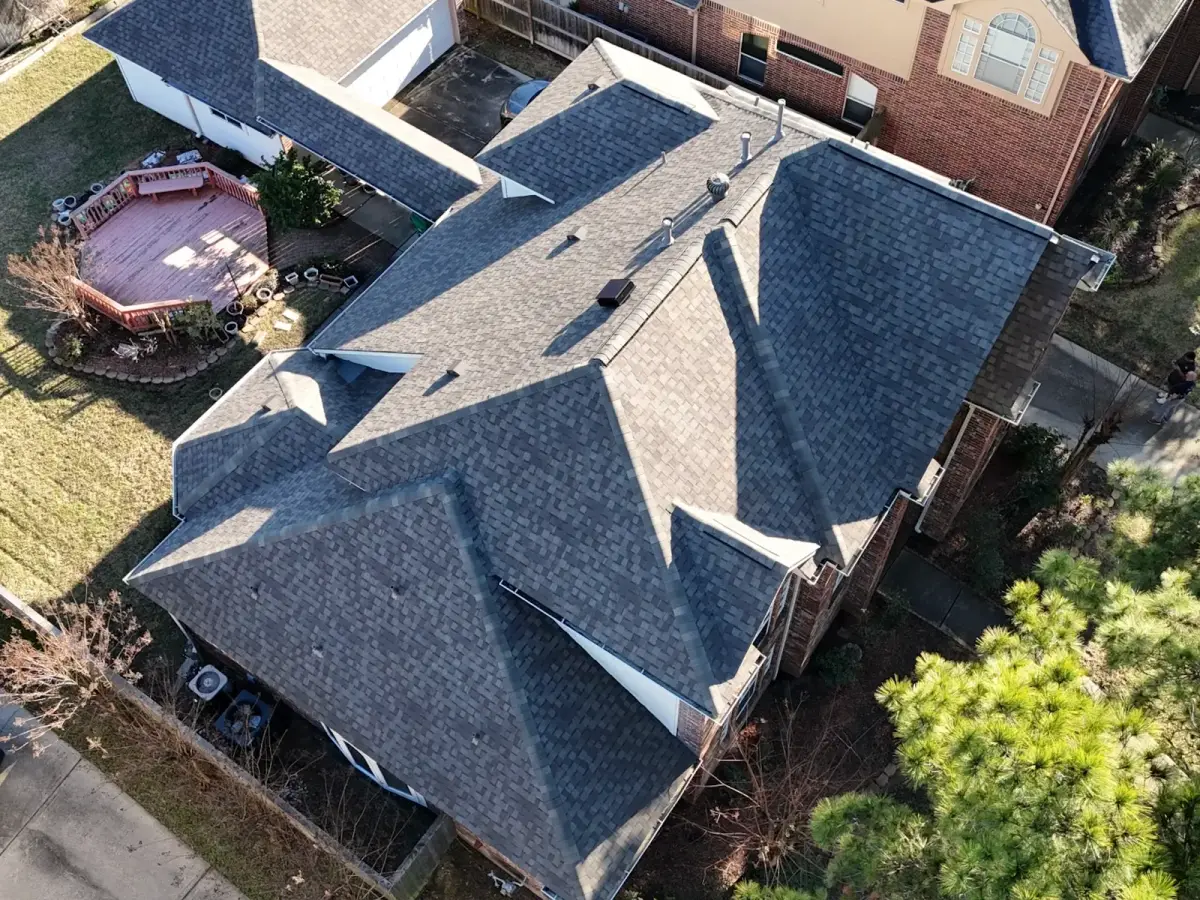
- Most single-family replacements are installed in one day; larger or steep, complex homes take two. The longer pole is the covenant approval, which is why we file the RDRC application early. Your named project manager confirms the schedule in writing before work begins.
- How long does a roof last in this climate?
- InterNACHI's life-expectancy chart puts 3-tab asphalt around 20 years and architectural shingles around 30 — and notes hot climates drastically reduce asphalt shingle life. Gulf Coast heat, humidity, UV, and storm exposure all push local roofs toward the early end of those ranges, which is why free annual inspections are worth their price.
- Can insurance pay for my roof?
- If a covered peril (hail, wind, falling limbs) caused the damage, yes — subject to your policy type. Replacement-cost policies pay current prices in two parts (depreciated value first, the rest after proof of repairs); actual-cash-value policies deduct depreciation, which per TDI's example can leave a 20-year-old roof paying out $4,000 on a $10,000 replacement. We document damage to claim standard and tell you honestly whether filing is justified.
- How soon after hail should I get an inspection?
- Promptly. Hail bruising isn't always visible from the ground, TDI notes some policies carry one-year claim deadlines (check your contract), and evidence is freshest right after the storm. NOAA logs damaging hail in Montgomery County nearly every year — if hail moved through your area, a free documented inspection settles the question either way.
- Can you repair my roof instead of replacing it?
- Whenever a sound repair buys you years, that's what we recommend — most repairs run same-day or next-day. If the roof is at end of life, we'll show you the photos that prove it and put both options in writing. The decision stays yours.
- What shingles last longest here?
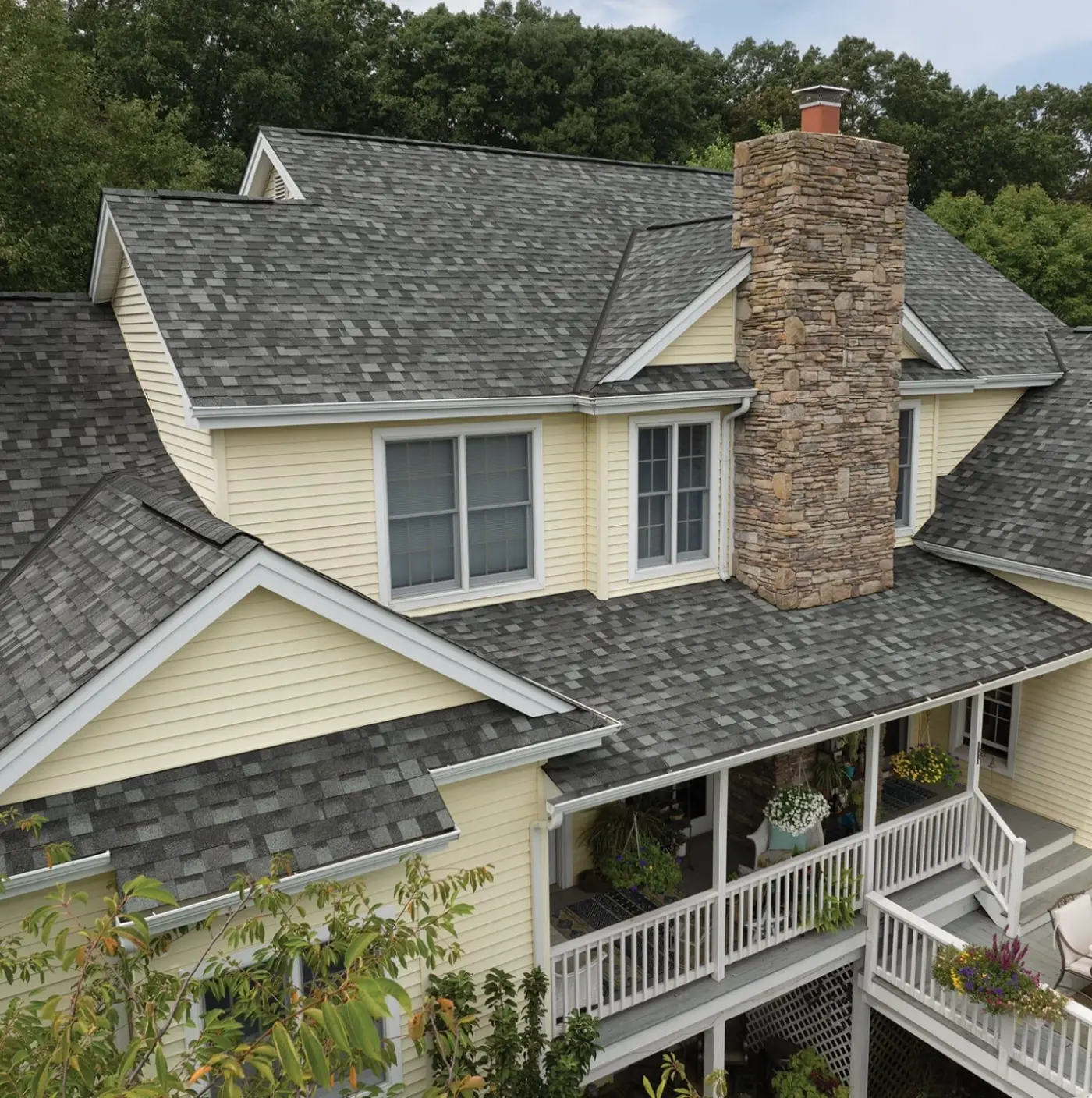
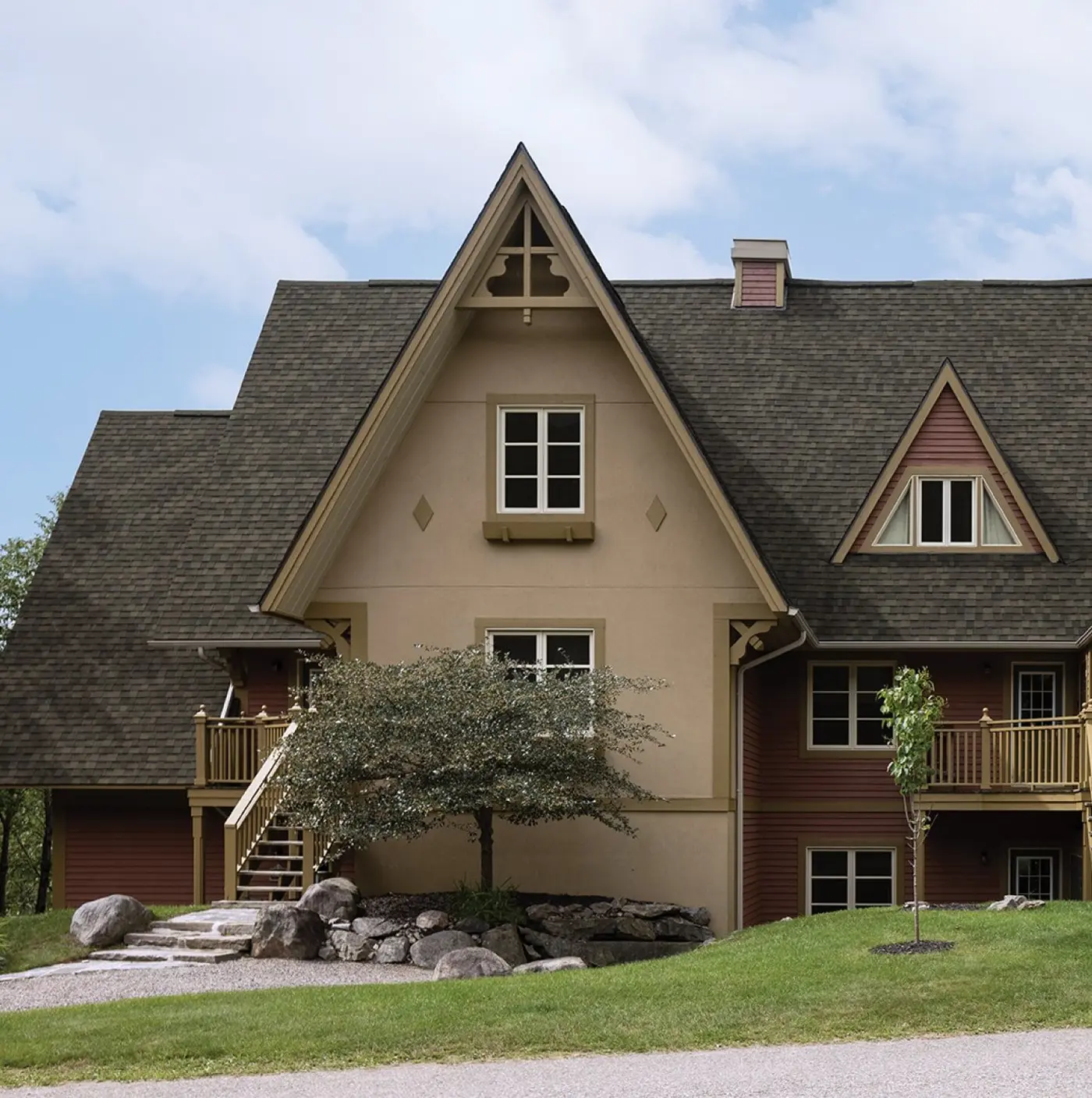
- Among asphalt products, premium architectural lines with strong wind and algae warranties do best in this climate — we install IKO Dynasty as standard and IKO Nordic when you want Class 4 impact resistance, both with a 130-mph wind warranty and a 10-year algae warranty for Gulf-Coast streaking. For maximum service life, the Metal Roofing Alliance puts standing-seam metal at 30–50+ years, and the Township Standards accept non-glossy metal.
- What wind rating should I look for?
- Wind resistance comes down to the warranty and the install detail: IKO Dynasty and Nordic both carry a 130-mph limited high-wind warranty when applied to IKO's requirements, thanks to the reinforced ArmourZone nailing band that resists uplift. Just as important is sealing the edges — a proper starter course at the eaves and rakes is where most wind failures begin.
- What happens during your inspection?
- A forty-photo documented walk of every slope, valley, penetration, and — where accessible — your attic: hail and wind evidence, granule loss, nail pops, flashing condition, pipe boots, ventilation. You get written findings within 24 hours with an estimated remaining life. Free, no obligation, no door-knocking.
- Class 3 vs Class 4 shingles — what's the difference?
- UL 2218 impact classes: Class 3 shingles withstand a 1.75-inch steel ball in drop testing, Class 4 a 2-inch ball — Class 4 is the highest rating. TDI notes Class 4 coverings receive the highest premium credit where insurers offer discounts, but each company sets its own amount. We quote standard and impact-rated options side by side.
- A roofer offered to cover my deductible. Is that legal?
- No. Texas Insurance Code §707.002 requires policyholders to pay their deductible, and Business & Commerce Code §27.02 makes it an offense for a contractor to pay, waive, or absorb it — TDI warns of fines and jail time, and insurers can require proof of payment before releasing full claim funds. Treat the offer as a red flag about everything else that contractor does.
- Do you handle metal, tile, and slate roofs?
- Yes. The Township Standards accept tile, slate, composition shingles, and stone-coated or standing-seam metal (non-glossy) — and premium systems are the norm in villages like Carlton Woods and Sterling Ridge. Their failure points are underlayment, flashing, and fasteners rather than the field material, which is exactly what our inspections target.
- Why does my roof have black streaks, and is it damage?
- Almost always algae — Gloeocapsa magma, which ARMA identifies as the most prevalent roof-discoloration species and notes is most widespread in the Gulf States. The stains don't weaken shingles by themselves, but never power-wash them (ARMA warns pressure washing damages asphalt roofing). Algae-resistant shingles with copper granules prevent it on your next roof.
- Does attic ventilation really matter in Texas?
- Enormously. ARMA notes a poorly-vented attic can reach 140°F on a 90°F day, cooking shingles from below and shortening roof life. The guideline is 1 square foot of net free vent area per 300 square feet of attic, balanced between intake at the soffits and exhaust at the ridge — something we evaluate on every inspection and correct on every replacement.