What a full replacement includes
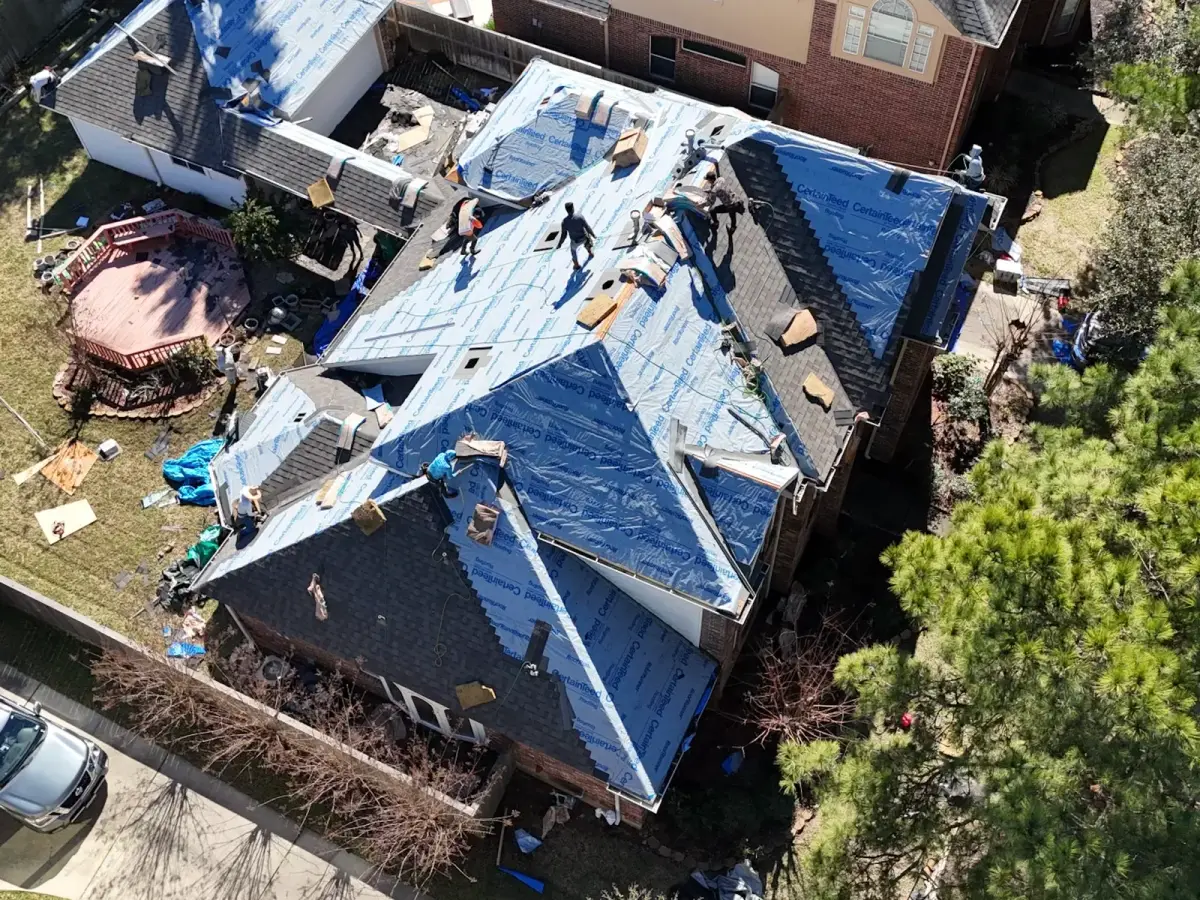
- Tear-off to deck — the residential code (IRC R908.3) requires removing existing coverings before new roofing goes on, and prohibits covering a water-soaked deck or stacking a third layer. In Texas heat, an overlay bakes from below anyway. We don't do "roof-overs."
- Decking inspection and replacement where needed. Rotted or delaminated sheathing can't stay under a new roof; every replaced sheet is photographed and itemized.
- Synthetic underlayment (higher tear strength and water resistance than old asphalt felt) plus self-adhering ice-and-water membrane at valleys and penetrations — the self-sealing layer at exactly the details that leak.
- New drip edge at eaves and rakes (a code requirement — IRC R905.2.8.5), new pipe boots, new flashing where it's aged, and ridge ventilation sized to the job.
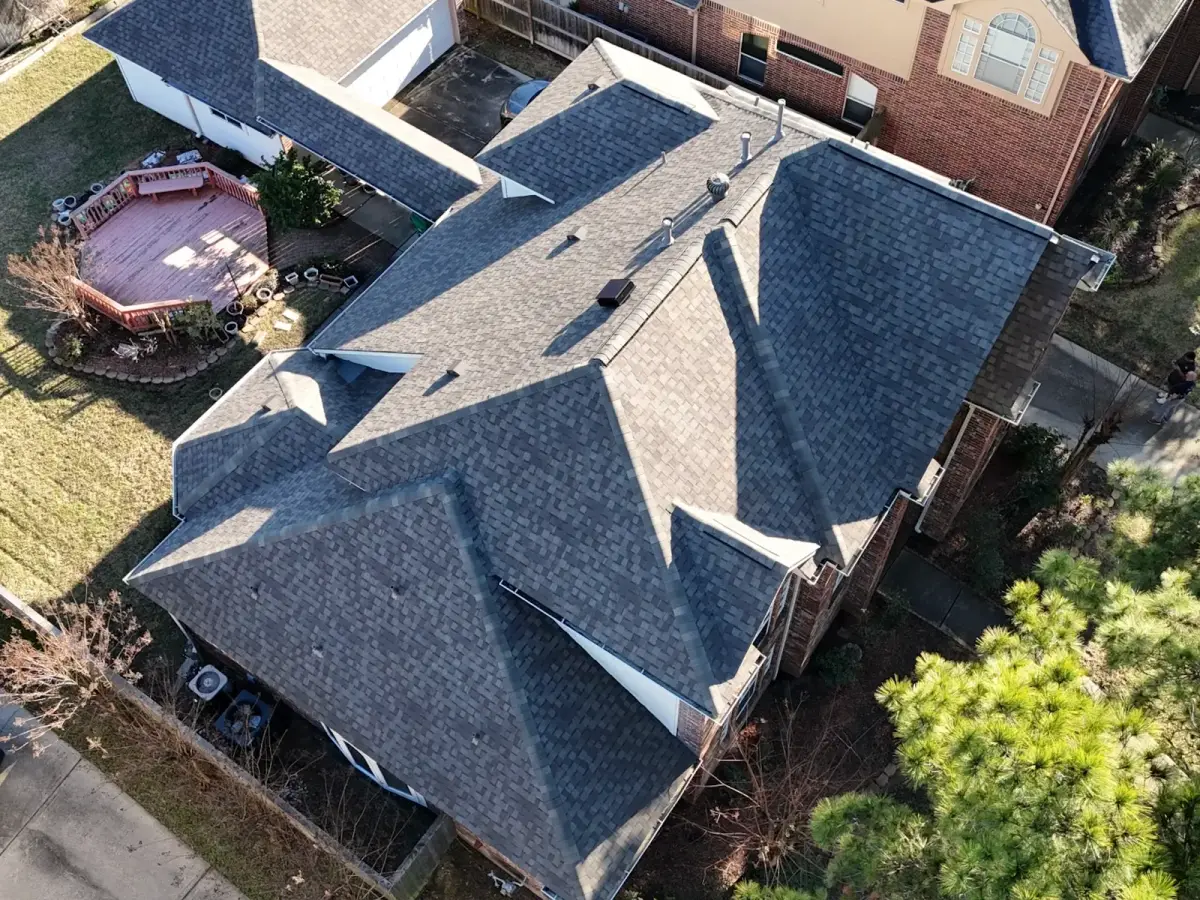
- IKO architectural shingles nailed through the reinforced ArmourZone to manufacturer spec — six-nail patterns where wind exposure calls for it.
- IKO manufacturer warranty registered on every install: a Limited Lifetime product warranty, the 15-year non-prorated Iron Clad Protection period, a 130-mph limited high-wind warranty, and a 10-year algae-resistance warranty — coverage any installer can register, with no special certification required.
- Forty-photo documentation packet at close — yours to keep, plus a copy for your insurance file.
Materials we install
We standardize on IKO and put your options side by side in writing:
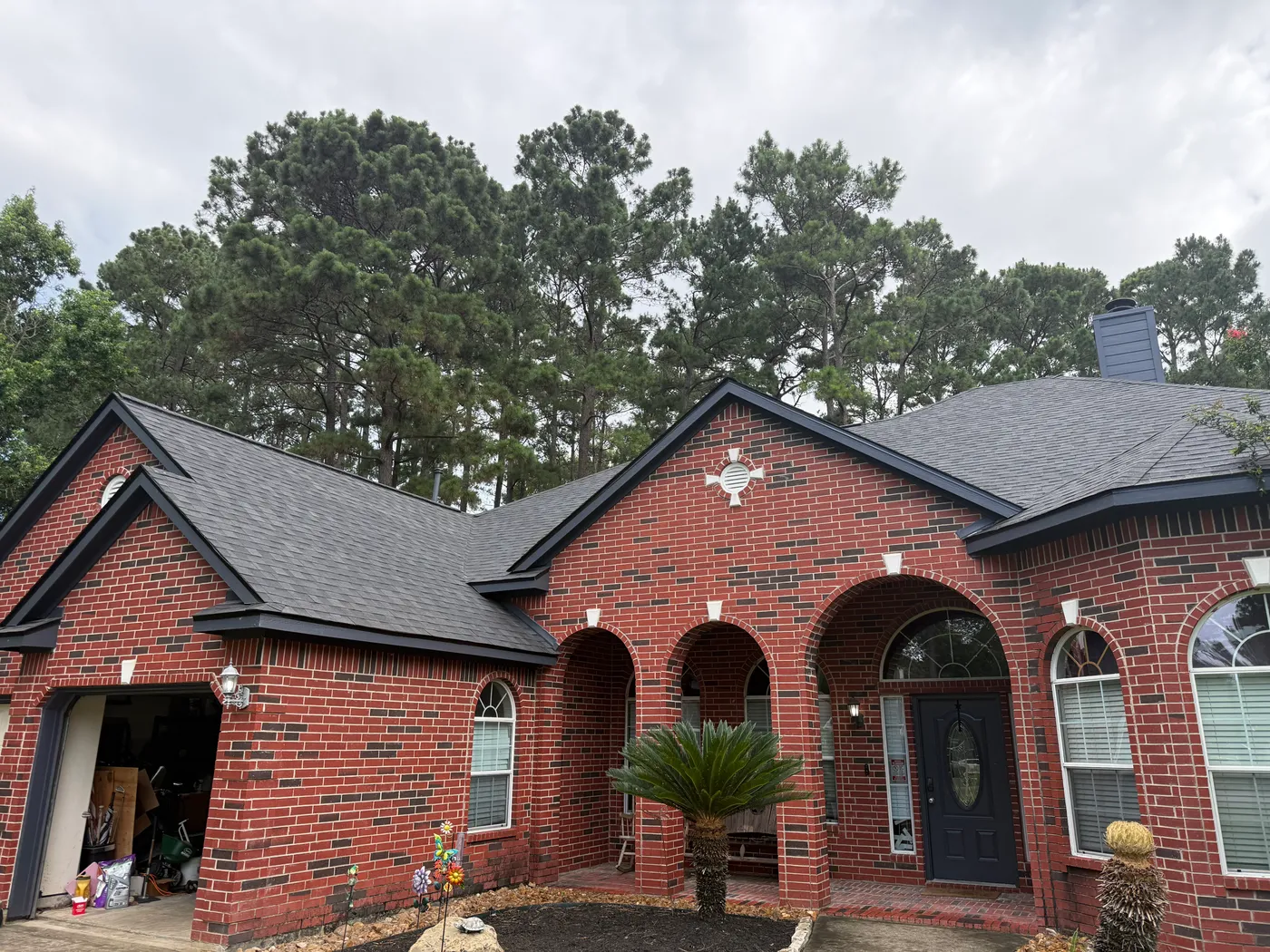
- IKO Dynasty (standard)our default architectural shingle — the reinforced ArmourZone nailing band, a 130-mph limited wind warranty, Limited Lifetime coverage, 15-year Iron Clad Protection, a 10-year algae warranty, and Class A fire, in more colors than any other IKO line.
- IKO Nordic (Class 4 upgrade)IKO's highest-performing line — polymer-modified (SBS) asphalt that flexes for the highest hail rating, UL 2218 Class 4, with the same 130-mph wind, Limited Lifetime, and Iron Clad coverage as Dynasty.
- Class 3 vs. Class 4 & insurance — Class 4 (Nordic) is the highest UL 2218 impact rating, but it's a lab classification, not a hail guarantee, and hail isn't covered by the shingle warranty. Its value is qualifying you for an insurance premium discount where your carrier offers one. See our Class-4 breakdown.
- Standing-seam metal30–50+ year service life per the Metal Roofing Alliance, concealed fasteners, 140-mph wind rating — at roughly two to three times the cost of asphalt.
The system under the shingles
Shingles are the visible 20% of a roof. Replacements fail or last on the other 80%:
- VentilationARMA reports a poorly-vented attic can hit 140°F on a 90°F day — heat that cooks shingles from below. We size intake and exhaust to the 1-in-300 net-free-area guideline with balanced soffit intake and ridge exhaust.
- Flashingthe code's job for flashing is keeping water out of every roof and wall joint (IRC R903.2). Step flashing, chimney details, and wall step-ins get rebuilt, not reused, when they're aged.
- Valleys and penetrationsice-and-water membrane under the vulnerable details, because that's where nearly every leak we chase started.
- Solar-ready prepplanning panels in the next few years? We pre-flash key locations while the roof is open.

What the process looks like
- Free inspection plus written estimate — the same day you call.
- Material selection and color sample drop-off.
- HOA / architectural-review submittal — we prepare and file the paperwork where your community requires it. (In The Woodlands, Township approval is mandatory for every re-roof — our Woodlands replacement guide covers that process.)
- Install day — usually one day, two for larger homes. Project manager on-site.
- Final walk-through, magnet sweep of driveway and yard, documentation packet delivered.
Permits and approvals, by jurisdiction
Permit rules here are patchwork, and we handle whichever applies: unincorporated Montgomery County requires no county permit for a residential re-roof (the county's own FAQ says so) — covenant approval is what governs communities like The Woodlands. Incorporated cities differ: Shenandoah runs a full roofing-permit program with wind-load, nailing, and color rules; the City of Houston requires re-roof permits. Wherever your home sits, the paperwork is our job, not yours.
What a replacement costs
Your price depends on size, pitch, material, decking condition, and roof complexity — which is why we measure, then put an exact figure in writing before leaving. For market orientation, attributed data: Angi (2026) reports a $9,602 national average with most projects between $5,900 and $46,000 ($4–$11 per square foot); Modernize (2026) lists architectural shingle at roughly $4.11–$5.57 per square foot installed; This Old House (2026) reports about $15,439 for an average 2,000-square-foot asphalt roof. Metal runs roughly two to three times asphalt (Metal Roofing Alliance). Those are market numbers — your written estimate is the real one.