
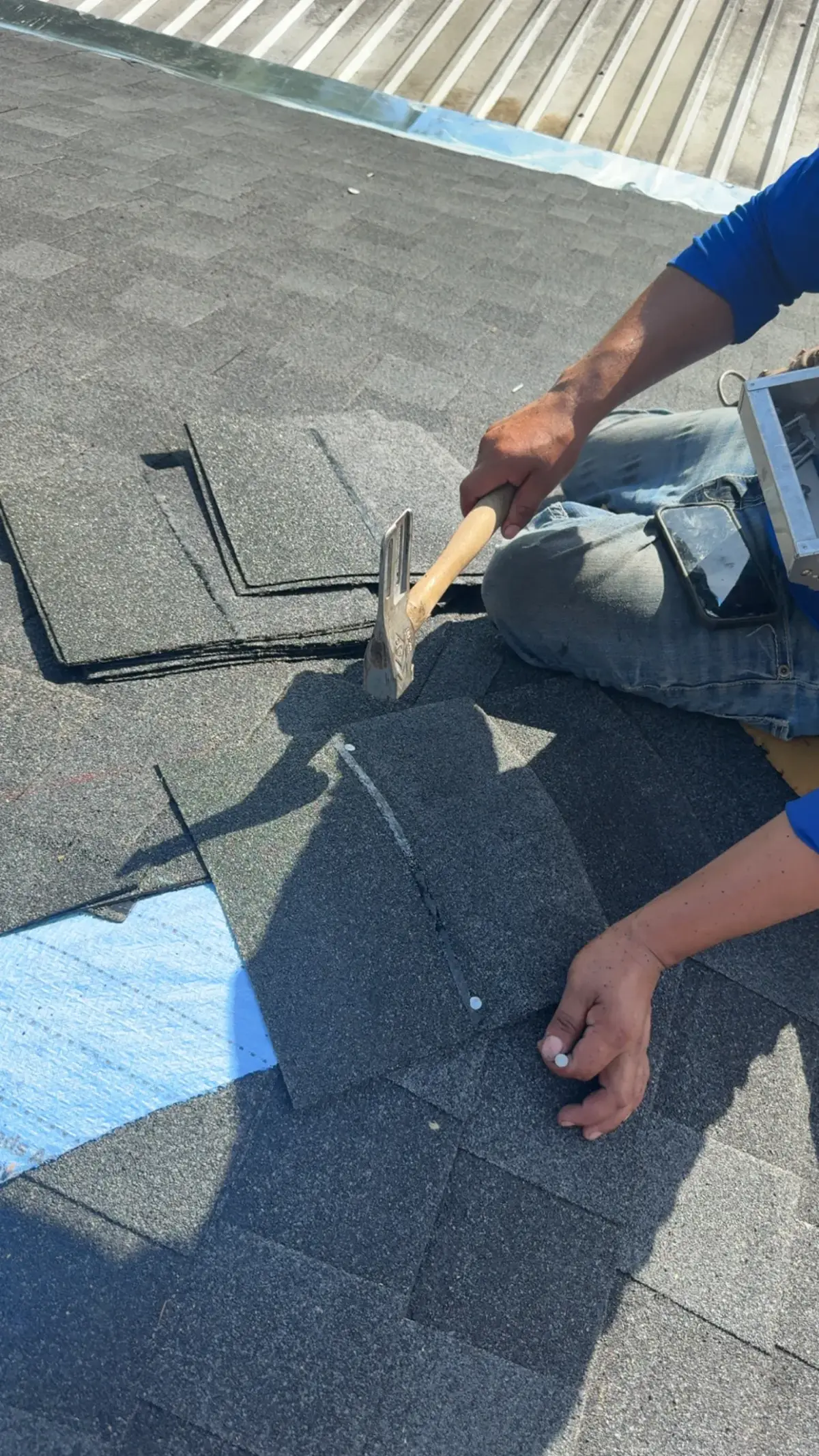
The repairs Woodlands roofs actually need
Fifty years of village-by-village construction means the community's repair calls follow its roof ages. What we see most, street by street:
- Pipe boot failuresthe top culprit in newer villages like Creekside Park and Sterling Ridge — neoprene collars degrade in UV and commonly crack within roughly 10–15 years, well before the shingles around them wear out. A mystery ceiling stain in a 2008-built home is this, more often than not.
- Wind-lifted shingles and ridge capssoutheast Texas averages 50–60 thunderstorm days a year per the National Weather Service, with downbursts capable of 60–100+ mph. IBHS research shows the sealant bond is what holds a shingle down — and that bond weakens with age, which is why the same gust damages a 20-year-old roof and leaves a 5-year-old roof alone.
- Flashing at walls, chimneys and valleysthe code's whole job for flashing is keeping water out of joints (IRC R903.2); on older Grogan's Mill and Panther Creek roofs we regularly find step flashing that's been painted over, reused through a prior re-roof, or was never right.
- Debris and algae damage from the tree canopythe community's defining pines shed constantly; valleys and gutters load up, water backs under shingles, and shaded slopes grow the algae streaking common across the Gulf States. The Township covenants actually require owners to keep roofs clear of leaves, needles and branches.
- Nail pops and granule lossbacking nails puncture the shingle above; granule loss exposes asphalt to UV and accelerates aging (IBHS). Both are cheap to fix early and expensive to ignore.
Yes — even repairs have a covenant rule here
An oddity of The Woodlands worth knowing: while minor repair of existing improvements is generally exempt from Township approval, the 2024 Residential Development Standards carve out roofing — roofing repairs require a permit at the time of repair or replacement. It's paperwork, not a project-killer, and we handle the submittal as part of the job so your repair is covenant-clean. (No county permit applies — Montgomery County doesn't require one for residential roofs.)
Repair or replace? The honest math
Our rule is simple: if a sound repair buys you years, we repair. If the roof is at end of life, patching it is throwing money away — and we'll show you the photos that prove it either way. The calendar matters here: InterNACHI puts three-tab shingles around 20 years and architectural around 30, and notes hot climates drastically shorten asphalt life. On a '90s Alden Bridge roof, a leak is often the roof telling you it's done; on a 2012 Creekside Park roof, the same leak is almost certainly a $400 boot, not a $15,000 roof. Attributed market context: Angi (2026) puts typical roof repairs at $400–$2,000.
Storm repairs and emergency response
After wind or hail moves through Montgomery County — and NOAA's storm database logs damaging events here nearly every year — we prioritize active leaks: emergency tarping to stop the water, then a documented repair or a claim-ready assessment if the damage justifies involving your insurer. If a storm just hit, our storm-response page explains the first 48 hours; if you're weighing a claim, our insurance pages walk the Texas rules.
Looking for how we handle this service everywhere we work? See the full roof repair guide.