Why replacing a roof works differently in The Woodlands
Most of The Woodlands is unincorporated Montgomery County, and the county's own permitting FAQ is explicit: residential properties do not require a county permit for a roof. What governs your re-roof instead is the covenant layer — The Woodlands Township's 2024 Residential Development Standards require prior written approval from your village's Residential Design Review Committee (or designated Township staff) for all roof replacement. Skip that approval and you're exposed to covenant enforcement even though no county inspector will ever knock. The practical order of operations:
- Free inspection and written estimate — same day you call.
- Material and color selection from the Township's accepted list — we bring compliant samples to the driveway.
- RDRC application through the Township's Civic Access Portal — we prepare and file it, with product samples where required. No property survey is needed for a re-roof.
- Approval comes back (the Standards give committees a 45-day review window — most jobs clear far sooner, but we never order material before approval).
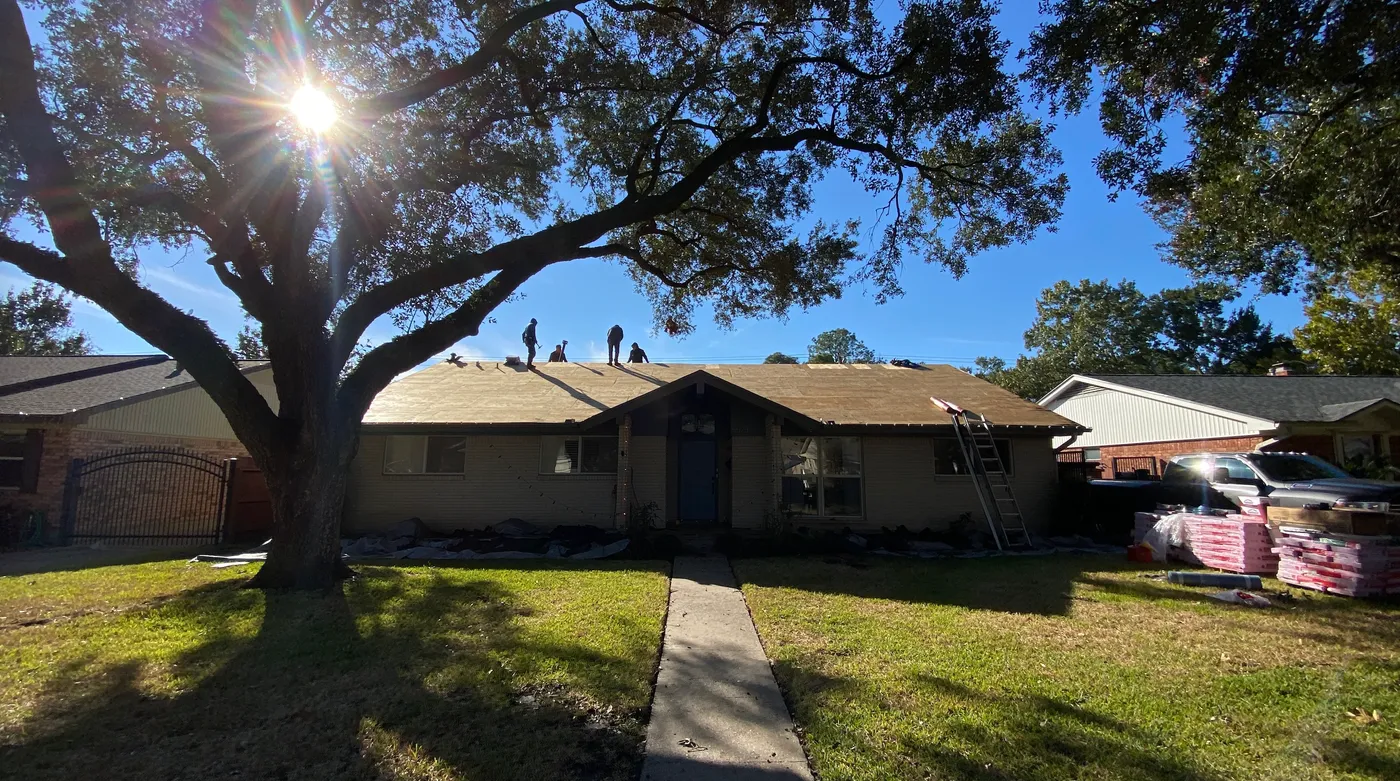
- Install — typically one day, two for larger or complex rooflines.
- Final walk-through, magnet sweep, and your forty-photo documentation packet.
What the Township Standards allow on your roof
The 2024 Residential Development Standards are specific about roofing: colors must be muted, without color pattern, and harmonize with the natural landscape. Acceptable materials include composition shingles, tile, slate, stone-coated or standing-seam metal, and cement-fiberboard — with all metal roofing required to be free of glossy finish. Within those rules there's more room than most homeowners expect:
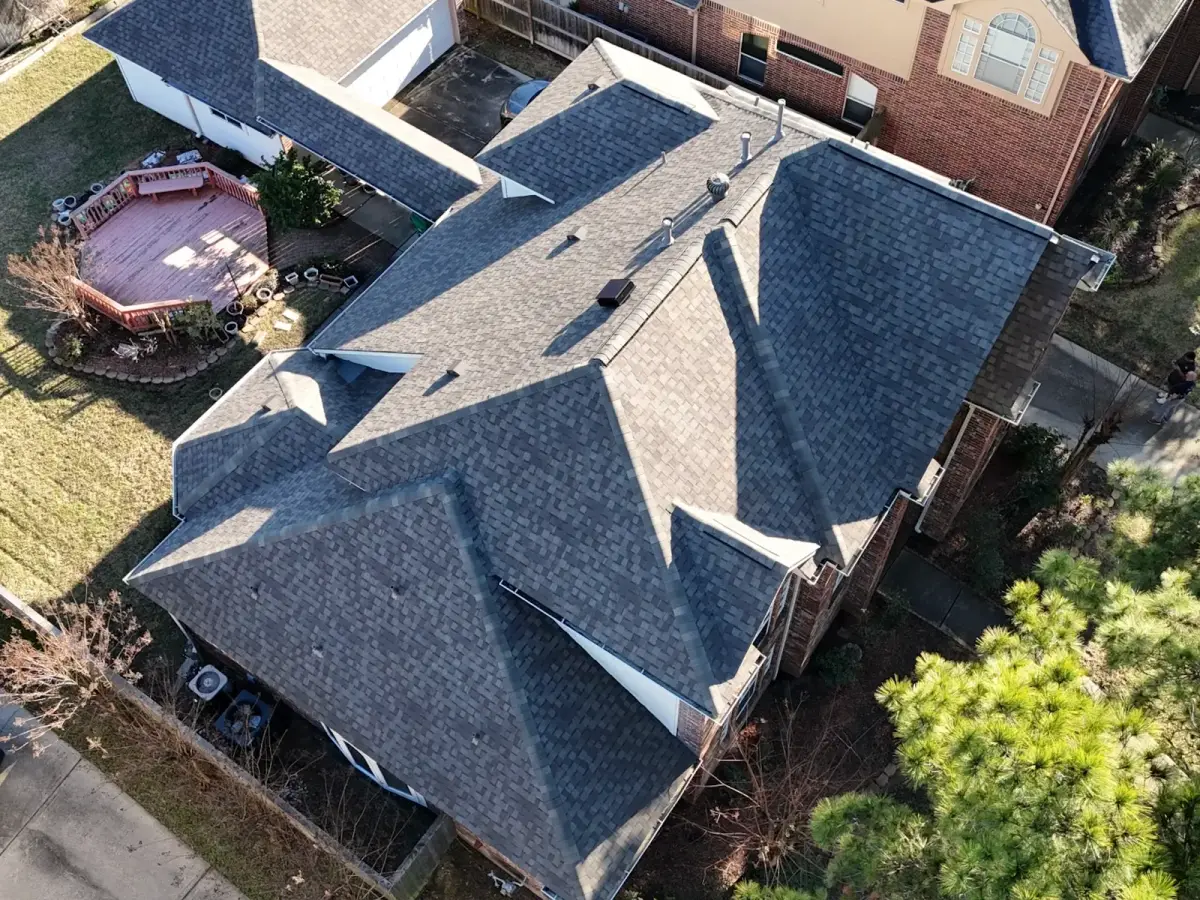
- Architectural asphalt shinglethe dominant choice village-wide. We install IKO Dynasty in Standards-compliant muted colors as our standard architectural line.
- Impact-resistant upgradesIKO Nordic carries UL 2218 Class 4, the highest impact rating, in the same muted palettes — worth pricing given this county's hail history and any insurance discount your carrier offers.
- Standing-seam metalaccepted by the Standards in non-glossy finishes; the Metal Roofing Alliance puts metal service life at 30–50+ years.
- Tile and slateaccepted materials, most common on higher-end homes in villages like Carlton Woods and Sterling Ridge.
Tear-off to the deck — because code and climate both say so
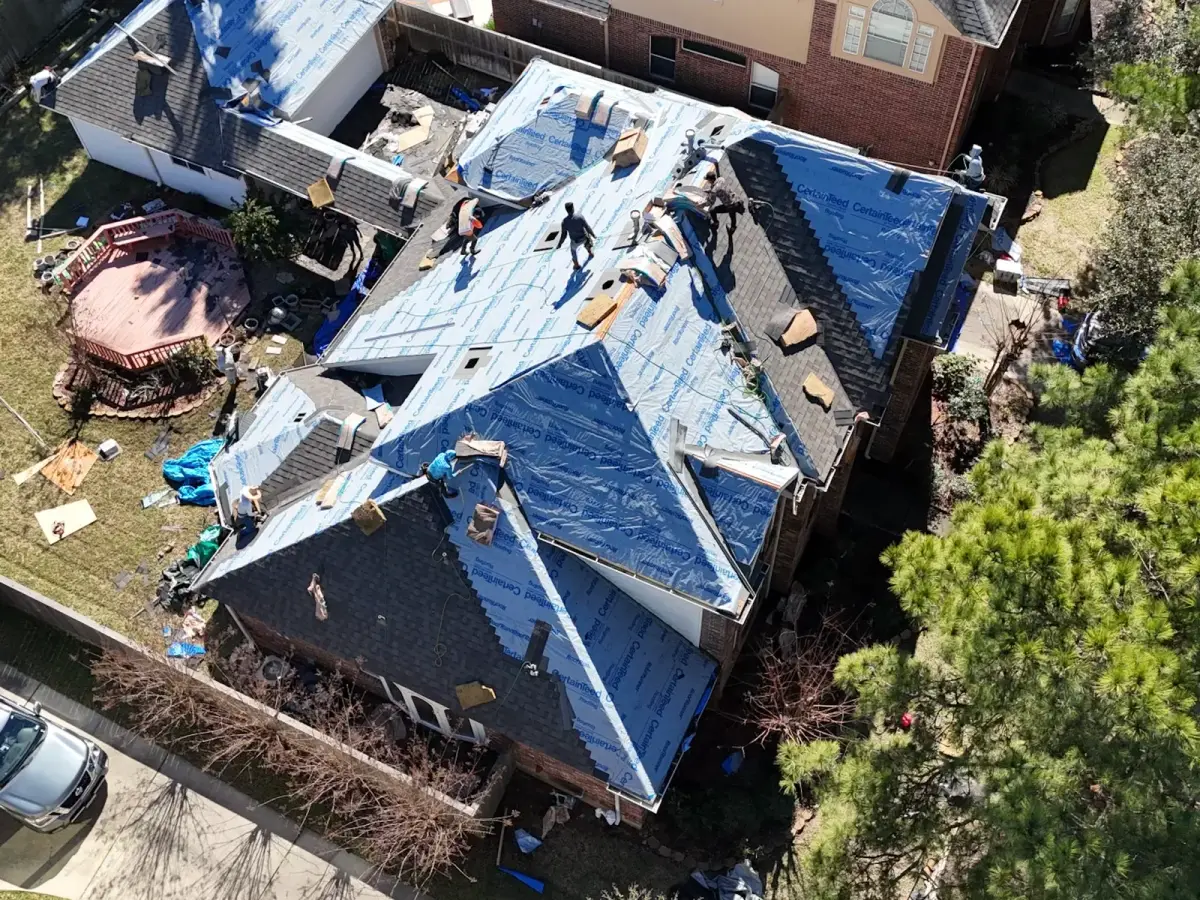
We replace roofs by removing everything down to the decking. The residential code (IRC R908.3) requires removing existing layers before new covering goes on, with narrow exceptions — and prohibits a roof-over where the deck is water-soaked or two layers already exist. In this climate the code is just common sense: Gulf Coast heat bakes a second layer from below, and you can't inspect or repair decking you never see. Tear-off is also when we replace what actually fails on Woodlands roofs — flashing, pipe boots, and ventilation sized to the ARMA 1-in-300 guideline, because a poorly-vented attic here can run decades of extra heat stress through your shingles.
When roofs come due, village by village
The Woodlands built out village by village over five decades, so replacement waves arrive village by village too. Grogan's Mill (opened 1974) and Panther Creek (mid-1970s) are on their second or third roofs. Cochran's Crossing (1983) and Indian Springs (1984) cluster in the prime 25-to-40-year replacement band. Alden Bridge (1994) and College Park (designated 1995) are the busiest replacement territory in the community right now — thousands of builder-grade '90s roofs aging out together. Sterling Ridge (1999) is at the front edge of its first wave, and even Creekside Park (2007) is old enough that original components like pipe boots are failing. Our village pages cover each area's housing stock in detail.
What a replacement costs in this market
Every roof is priced from its own measurements, pitch, material, and decking condition — which is why our estimate is written, itemized, and delivered before we leave your driveway. For orientation, attributed market data: Angi's 2026 figures put the national average roof replacement at $9,602, with most projects between $5,900 and $46,000 depending on size and material ($4–$11 per square foot); Modernize (2026) lists architectural shingle at roughly $4.11–$5.57 per square foot installed; and This Old House (2026) reports about $15,439 average for a 2,000-square-foot asphalt roof. Larger Woodlands homes with complex rooflines trend above national averages; metal runs roughly two to three times asphalt per the Metal Roofing Alliance. Those are market numbers, not our quote — the only number that matters is the one we put in writing for your specific roof.
Looking for how we handle this service everywhere we work? See the full roof replacement guide.